For decades, aquatics facilities were designed with a single purpose in mind — competition pools for athletes, leisure pools for families, and therapy pools for rehabilitation. Today, that model is rapidly disappearing. Across North America, a new generation of aquatics facilities is expected to serve competitive swimmers, school programs, families, fitness users, and entire communities, often within the same footprint. These are no longer single-purpose assets; they are multi-functional hubs that must deliver performance, accessibility, durability, and flexibility simultaneously.
The Rise of the Multi-Use Aquatic Facility
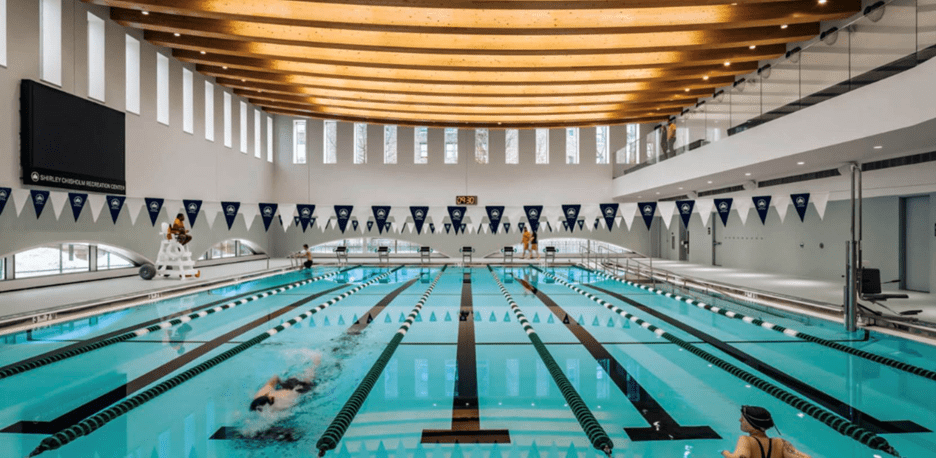
Modern aquatics centers are being designed as community anchors — places where programming diversity is as important as physical infrastructure. The Shirley Chisholm Recreation Center in Brooklyn, N.Y. (Studio Gang) blends a six-lane fitness pool with accessible ramp entry within a wellness-focused environment. The Buchanan Recreation Center expansion in Evergreen, Colo. (EVstudio / Counsilman-Hunsaker) supports competitive training, youth programming, and recreational use — all within a single aquatics space.
“The level of programming required has become more sophisticated over the years,” explains Mike Mintenko, Director of Sales at Myrtha Pools. “Facilities that have more options for the communities that they serve can deliver opportunities for all demographics.”
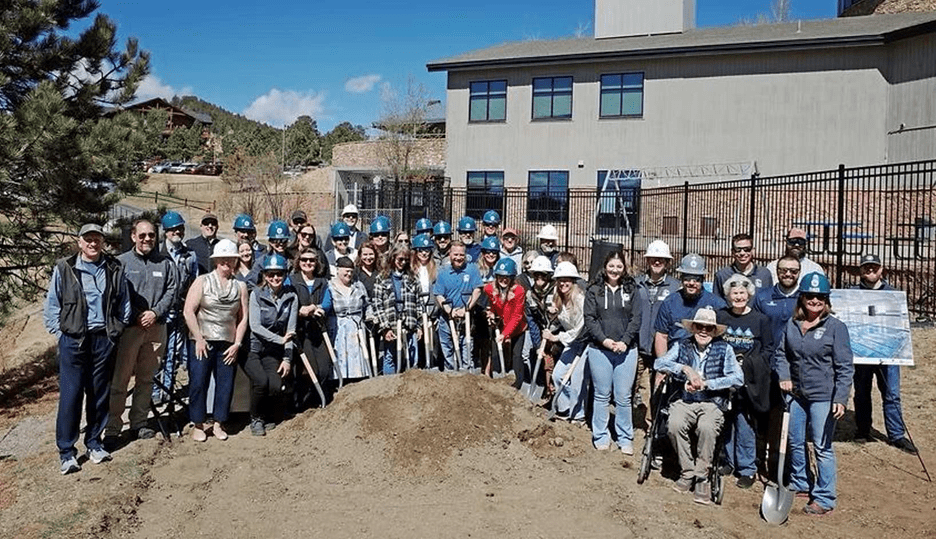
Courtesy Myrtha Pools.
Figure 2: Buchanan Rec Center Aquatics Expansion: Evergreen, Colo.
Redefining High Performance — and Accessibility
In this new environment, “high performance” is no longer limited to elite competition venues. Even community pools are now expected to meet competition-ready tolerances, consistent surface conditions, and durability under heavy, continuous use. At the same time, accessibility features — ramp entries, multi-depth configurations, flexible programming zones — have become standard requirements, not upgrades. Facilities must accommodate first-time swimmers, youth programs, seniors, and competitive athletes alike.
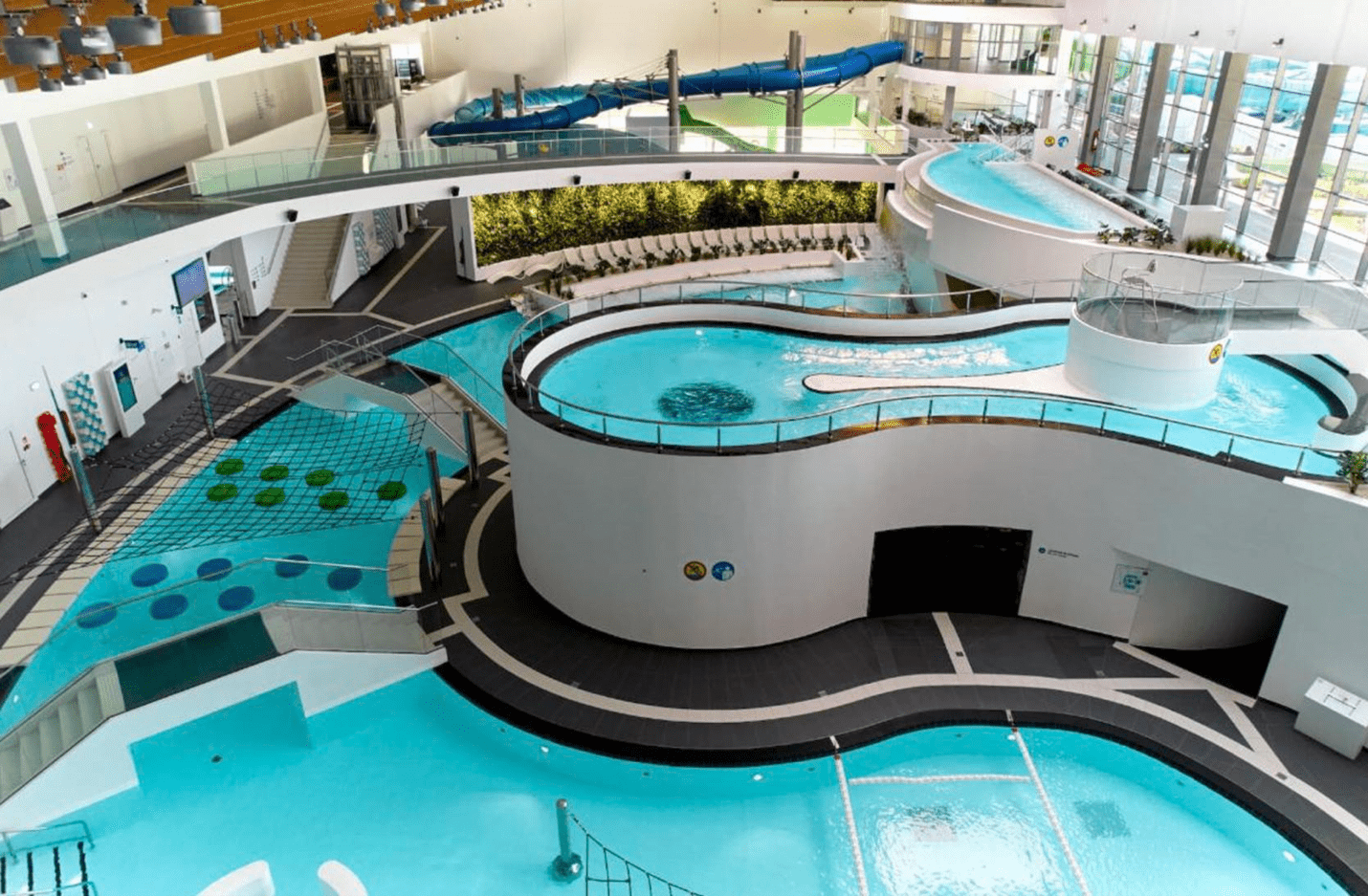
Courtesy Myrtha Pools.
Figure 3: Factory of Water: Szczecin, Poland.
The Real Challenge: Serving Everyone Without Compromise
Balancing performance and accessibility introduces real complexity.
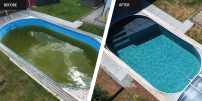
Different user groups require different depths and configurations. High usage increases wear. Downtime is costly with packed programming schedules. Traditional construction approaches — particularly those relying on applied finishes — can struggle to meet these demands consistently, introducing long-term risk through variability in installation and susceptibility to cracking or staining. As facilities grow more complex, the industry is being pushed toward more controlled, system-based approaches.
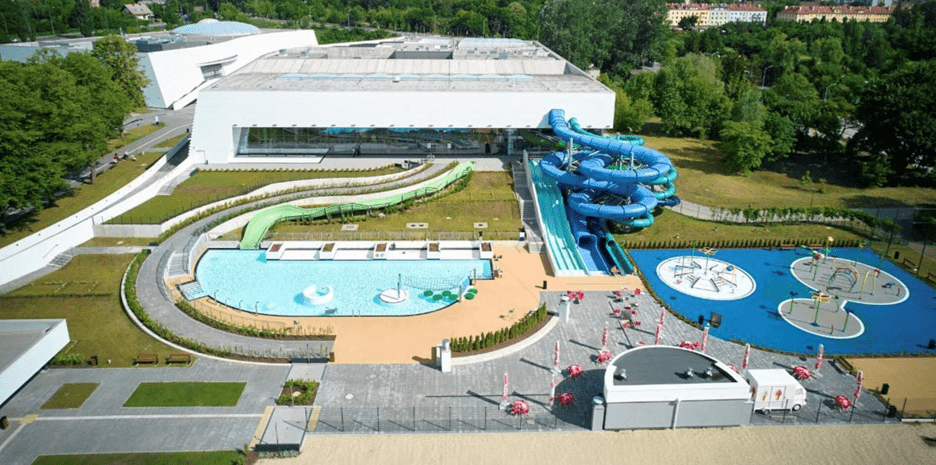
Courtesy of Myrtha Pools.
Figure 4: Factory of Water: Szczecin, Poland.
Engineered Systems and the Role of Reinforced PVC Membranes
One of the most significant shifts in modern aquatics construction is the move toward engineered, factory-controlled systems — and at the center of this trend is the growing use of reinforced PVC membranes. Myrtha Pools has been at the forefront of this evolution, utilizing these membranes to guarantee watertightness independently of the structure.
“It’s a proven system with durability and lower through-life operational costs,” says Mintenko. “Reducing the frequency of maintenance compared to traditional pools offers huge advantages — less downtime for repair and less money spent over the years of operation.”
Unlike traditional pool construction — where waterproofing depends on the concrete shell itself — reinforced PVC membranes provide a continuous, impermeable waterproofing layer with factory-controlled consistency, the ability to absorb structural movement, and adaptability to complex geometries. In multi-use facilities where downtime is costly, this reliability becomes a decisive advantage.
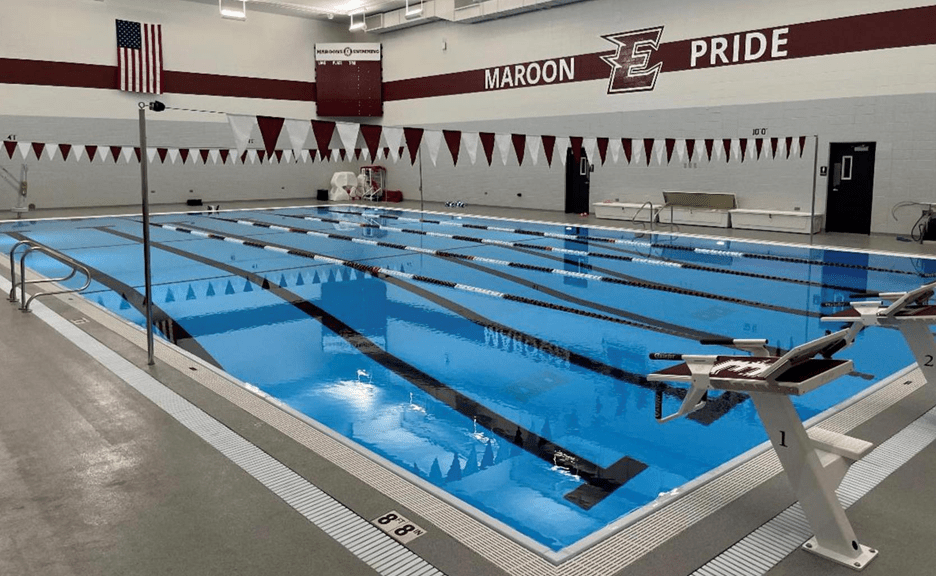
Courtesy Myrtha Pools.
Figure 5: Elgin High School: Elgin, Ill.
Real-World Applications
At Elgin High School in Illinois, a renovation by DLA Architects and Water Technology Inc. transformed an aging pool into a modern, competition-ready facility.
“Myrtha is a modular system shipped as component parts and assembled on site,” explains Mintenko. “Every part, including the PVC membrane, was able to be moved into the pool space through a standard door with no need for heavy equipment.”
At Brownsburg High School in Indiana, an expansion by Landmark Aquatic reprogrammed a 25-year-old pool into a 50-meter-by-25-yard facility. “The PVC membrane was utilized as a key component that brought an aging pool back to life,” says Mintenko.
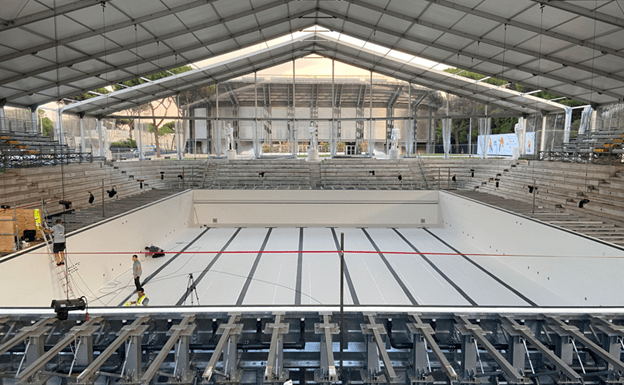
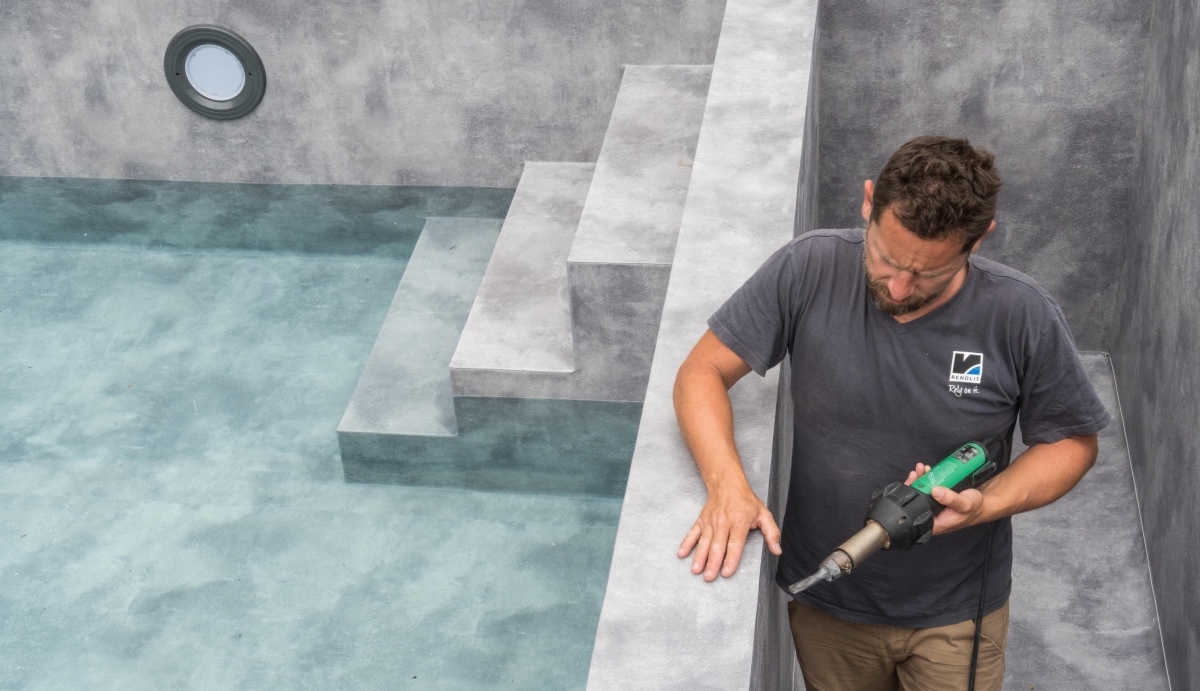
Photo Courtesy RENOLIT.
Figure 6: An installation in progress.
Designing for Long-Term Value
Owners and operators no longer evaluate projects on upfront cost alone. They are asking how a facility will perform over 10, 20, or 30 years — and how much maintenance it will require. Reinforced PVC membrane systems directly address these questions by reducing long-term operational risk and improving facility reliability.
“Never having to re-plaster, re-paint, and re-tile a Myrtha Pool is how we separate ourselves from traditional construction,” says Mintenko.
The Future of Aquatics Design
Future aquatics facilities will be more multi-functional, inclusive, performance-driven, and technically advanced. Companies such as Myrtha are already demonstrating what this looks like — combining engineering precision, reinforced PVC membrane technology, and system-based construction to meet the needs of today’s users and tomorrow’s demands.
“Designers need to select products that have a wider range of operational advantages and stronger user group outcomes in order to maintain the project’s ultimate goals,” says Mintenko.
The question is no longer whether pools can serve multiple purposes. It’s whether they are being designed — and built — with the right systems to make that possible.