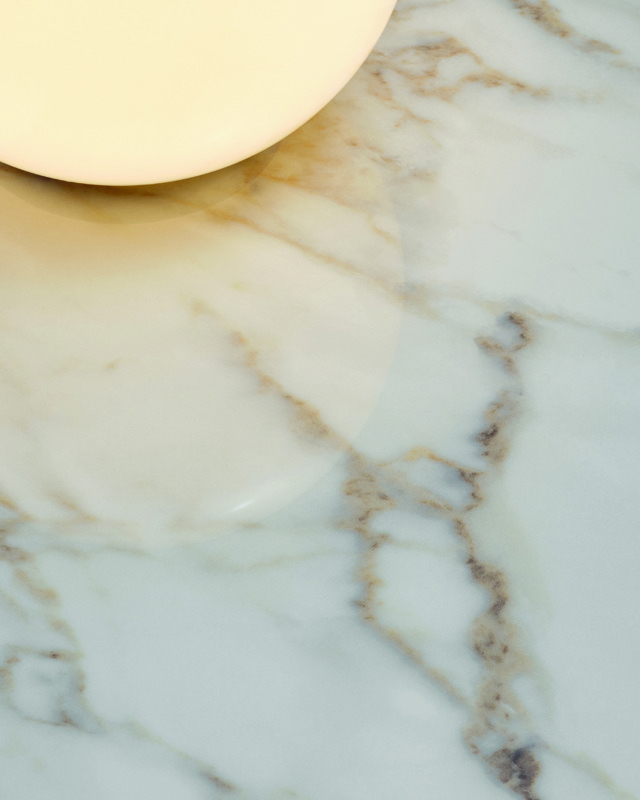
Few things straddle styles as well as tile. It can be used to evoke the classic, bring a space squarely into the present, or carry it into the future.
The primary sponsors of the Coverings tile and surfaces show have laid out the top tile trends of today. These apply not only to what types of tile are popular, but also how they’re being used and the types of environments they most often help create. While some apply mostly to indoor applications, we know that style and vibes can’t be contained within walls — they typically will spill over into the exterior spaces.
Here are the top tile trends, as identified by Ceramics of Italy/Confindustria Ceramica, Ceramic Tile Manufacturers Association of Spain (ASCER)/Tile of Spain, and Tile Council of North America (TCNA):
1 Generous with the detail: Articulated Accents
The evolution of technology has enabled tile to boast more precise, intricate, and realistic detailing than ever. Those surfaces meant to imitate wood or stone are becoming more realistic, while advanced glazing and contour-detailing techniques can produce a leather feel, or such intricacies as stitching-like details and pitted striations. Marble-like tiles not only closely replicate the veining found in the stone, but
also boast the luminosity, depth, and mild translucency of the real thing.
NATUCER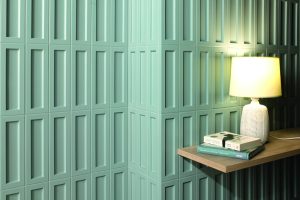
2 Feeling groovy: Tactile Experience
Ridges, embossing, and other high-relief patterns leave viewers wanting to reach out and touch the materials. Textures from subtle ridges to deeply undulating surfaces also can add a boldness to the environment. Advances in glazing chemistry and digital production add reactive qualities, allowing finishes to subtly shift with light, perspective, or angle, lending to walls and floors with a dynamic, almost living quality.
CERAMICA FONDOVALLE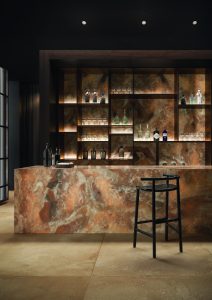
3 Form and function: New Surface Technologies
Many of the trends noted here were made possible by new technologies in manufacturing. But other, equally impressive, developments include the ability to create seamless and invisible induction cooktops and cell phone charging stations, as well as to produce stone-like materials that appear backlit, such as that used for the bar pictured.
MILE®STONE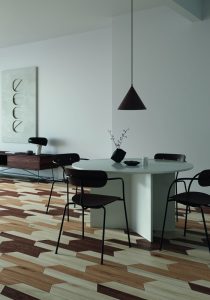
4 Inspired by fashion: Tailored Craft
Tiles are appearing with textures, colors, and patterns of fabric and leather, while designer and tile setters are creating more motifs inspired by fabric and fashion, such as the houndstooth-inspired pattern pictured. These looks tend to add a nostalgic or classic feeling to spaces that transcends trends, these experts say.
HARMONY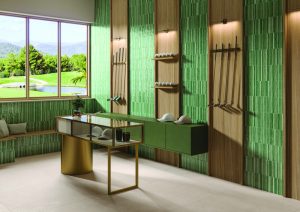
5 Vision in green: Jade Terrain
Tile evoking the color jade green, which resides near the center of the green color family, is used more than ever to inspire serenity in a space. The color family can range from soft pastel greens and vibrant turquoises to deeper mossy shades and saturated tones with subtle black shadowing.
When seen in monochromatic subway tiles, two-toned mosaics, large-format tiles with shades of jade veining, and many other examples, this trend lends itself equally to calming interiors and bold architectural statements.
APAVISA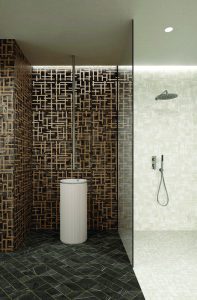
6 Heavy metals: Gilded Age
According to these experts, metallic touches are showing more prevalently in current tile trends.
These can include gold, silver, bronze, and copper ornamentation and flourishes. The shimmery accents are meant to interact with light to emphasize architectural features, enhance special depth, and add a feeling of luxury.
MARAZZI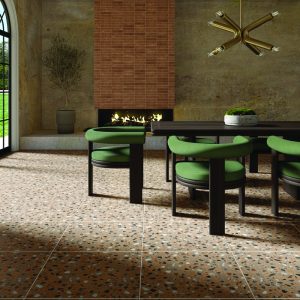
7 Light on the polish: Brutalist Sanctuary
Tile experts are seeing more influence of Brutalist Architecture, a style largely marked by raw, exposed concrete and bold geometric forms. In today’s tile, that can be found in concrete looks, terrazzo textures, and matte stone feel. Some are left unglazed to enhance the raw appearance. The materials are said to contribute to spaces that feel quiet, grounded and protective.
NAXOS CERAMICA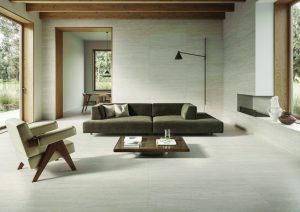
8 Naturally tranquil: Organic Minimalism
Some of the above trends, such as natural textures, are brought together with more desaturated or neutral colors to create tranquil, meditative spaces, where even raw-looking materials take on an air or refinement and sophistication.
CERAMICA BARDELLI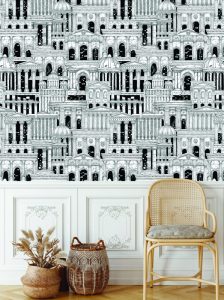
9 As it’s always been: Tile as Art
Tile has always helped introduce art into a space, whether through mosaic or custom-created pieces.
Interior designers continue turning to the material as an alternative to wallpaper or other art. In answer, this season’s collections introduce bold graphics, optical illusions, and continuous murals that create decorative storytelling, ranging from geometric and metallic identities to refined scenographic patterns and hand-drawn, narrative-driven scenes.
ONIX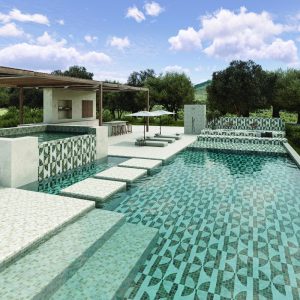
10 The versatility of small tile: Micro-Illusions
With all the fuss around large-format tile, its smaller cousin is still very much in rotation. This versatile material can be used to create intricate patterning or blend together to mimic larger-scale surfaces. Techniques such as precision scoring, digital printing, and color-matched grout allow these tiles to replicate expansive mosaic murals, create optical illusions, or produce layered dimensional effects.