Headquarters: San Diego
Founded: 2024
Industry segments: Service
Funding: Venture capital and
long-term investors
States serving: 1
Region: California
Founder origins: Former tech engineer with experience launching platforms in other home-services industries
—
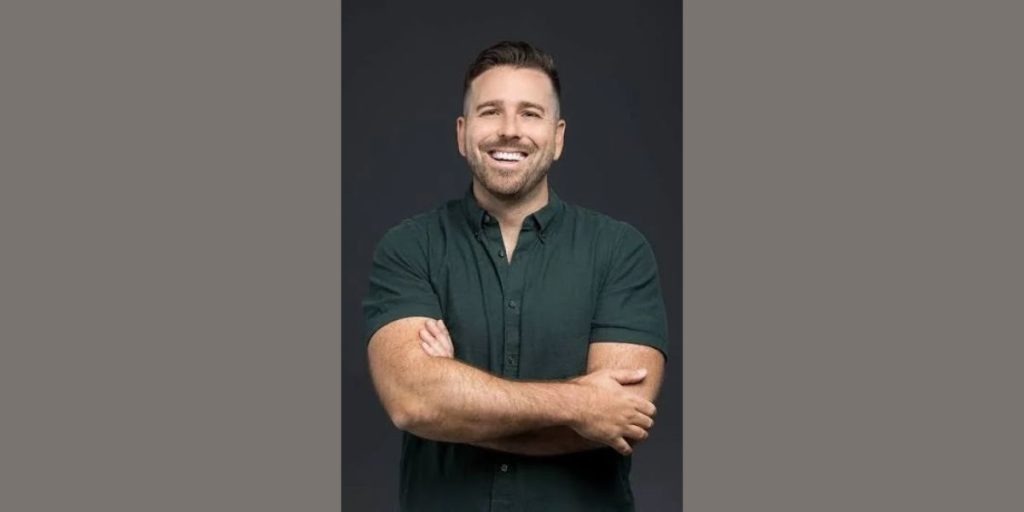
For Jeremy Yamaguchi, it seems that all roads have led here.
A software engineer by training, he began using his talent to nurture consolidation platforms in other home-services industries, such as lawn care, carpeting, window installation, and housekeeping, by developing customized software for each platform.
His company, Cabana, entered the pool industry two years ago, with the service segment a few years into the consolidation era. It has now made acquisitions that are both plentiful and strategic enough to reach all the major metro centers in California. The company boosted its exposure exponentially with the announcement this summer that it had acquired H&H Pool Services, based in the San Francisco Bay Area and formerly owned by pool/spa service luminary David Hawes.
Many consolidators understandably play close to the vest when discussing their strategy, preferring to announce developments one at a time and maybe project a few months out. By contrast, Yamaguchi could not be clearer about his aspirations—to become the first service platform to saturate the country and achieve true national status, while becoming a household name akin to pest-control brands like Orkin or Terminix. And he considers his company’s lack of private equity backing to be a marketing point.
Here, he explains why technology is the fulcrum of his consolidation strategy, what it will take for consolidators to succeed, and the unique opportunities and challenges they face in the pool and spa industry.
So, you have set a pretty ambitious goal for Cabana…
Our mission with Cabana is to establish the first national branded pool service company, becoming a true household name in every state.
We are only interested in pool service; that is firmly how we think about the company. We do not build pools; we do not remodel pools. When we are acquiring, we just want to buy the service business.
You have started and sold other home-services companies before. What made you get into the pool industry?
I have always been interested in pools. When I started a company called Lawn Love, I simultaneously launched a pool care company and ran them in parallel, but ended up shutting that down to go all-in on lawn care. But pools and lawns were ultimately pretty synonymous. They are different in very meaningful ways, to be clear, but they kind of rhyme—they are out of home, they are both low-ticket, they are density-driven, they are route-based, they are primarily residential but have meaningful commercial components. There is chemical complexity—lawns have pH as much as pools do. Labor dynamics are similar; customer acquisition dynamics are similar. It really felt pretty synonymous with what I had spent a whole lot of time building expertise in.
I understand you consider software the key to harnessing and standardizing resources and procedures for a large consolidation venture. I wonder if you could explain that?
I am a software engineer and have been building technology products for the trades for 15 years to help companies run better. We plan to be in the industry for decades, and we are investing significant time and dollars to build a fully custom operating system to run this business. We call it Cabana OS.
Building our own seemed inevitable because, given the scale of our ambitions, we knew we needed tooling to support a business much larger than what you could support with an off-the-shelf system. There are remarkable advantages to building custom technology designed to solve your unique, idiosyncratic needs and tailored to your workflows.
A scaled, national, multi-location player has sophisticated reporting, analytics, and data access needs: reporting on all tax complexities, data access, routing, and weather variance across regions, along with local laws and regulatory differences.
And we have built software to ensure high-velocity integration and acquisition. How do you gracefully and seamlessly onboard a whole book of customers, cut over everyone’s payment information, and get all the teams up to speed on how the software works? How do you design it from day one to be super intuitive and easy and self-explanatory to people who may have been running paper routes up to this moment?
So, building for that from day one is very helpful.
I understand you decided against private equity to fund this company…
We position ourselves as the anti-private equity. I do not think it is just positioning; it is reality. We have raised capital exclusively from venture capital firms and longer-term investors who are essentially patient, permanent capital. When you are in that position, you are not making decisions that are good today but bad in a decade, because you are still the owner in a decade.
As someone who has established and run platforms across other industries, what challenges have you found unique to the pool/spa service segment?
I think there are many. The first obvious one is the low barrier to entry. A high schooler with two weeks of training can clean your pool. They probably cannot do much with your equipment, and they are not going to help when things go awry, but the very first rung of the ladder is extremely low and accessible to everyone. That is good and bad. It means you can bring talent into the industry without having to wait for someone to get his journeyman electrician’s certification and finish an apprenticeship. But it also means you must build really durable, competitive moats through pricing, quality, training, and brand experience that you might not need if you had some deep regulatory barrier to new entrants. It is pretty easy for single players to spin up and start competing with you, so you better be good at competing.
Another challenge is that any given stop is pretty low-ticket, especially on the cleaning side. When you are an HVAC company installing a $5,000 condenser, you really do not care about route density. Windshield time does not matter: I can drive all the way across town for two $5,000 jobs, and so you do not need to be as operationally sophisticated as you do on pools, at least on the routing side. If a pool/spa service company does not reach critical mass on route density, you are probably losing money with every stop. It is an advantage if you can master it.
The third challenge is the scarcity of service-manager talent. The job requires this crazy combination of skills that takes roughly Superman-shaped humans to do well. They have to be a deep domain expert in pool chemistry, know the cleaning side extremely well, and generally have to be pretty literate on the pool pad as well, which is basically a hybrid plumber-and-electrician job and takes a ton of time in the business to become really familiar with. They have to be great people managers and team leaders. And lastly, they have to be great customer support reps, because the customer has a real problem; they are probably getting escalated to the service manager. Those are three or four distinct professions that they have to be good at, at once. And the number of great service managers in any given city you could probably count on one hand, and every one of these individuals is fully or overemployed.
That is a natural barrier to growing a business, and we address it in a couple of ways. First, we have built out deep training programs to help take our best-performing field techs and turn them into lead techs, then field supervisors, then supervisors, then service managers. We have enough scale to train folks within our ranks and progressively expose them to both sides of the business.
Solution two is Cabana OS, our software. We break the job down into its constituent parts and give our team tools to automate parts of it. Those things allow us to unlock access to much more talent, train our own folks for these jobs, and scale what I think is a longstanding bottleneck in the business.
Earlier, you explained some of the similarities between the pool-service business and lawn care. What have you found to be unique about the pool industry in your venture?
I think the industry is experiencing, or is about to experience, some interesting tailwinds as pool ownership continues to shift across generations. Most pools up to this point have been owned by the boomer generation, who are pretty DIY constitutionally and like to do their own gardening, clean their own gutters, wash their windows, and clean their pools. But millennials are graduating into becoming the predominant homeowners and, subsequently, pool owners.
Millennials love paying other people to do things for them. They will pay private limousines to deliver their burritos—also known as DoorDash. They love paying for other people to do their stuff. So, I do think that the share of pool owners who turn to pool service will grow. And as some older generations still live in their homes but lose the ability to clean their pools, they will be hiring you to clean them as well. I think this trend toward more people being willing to pay a professional will continue.
Another thing I think is special about this industry is that, despite all the happy facts—how big the industry is, how recurring and noncyclical the service side is—there is no household name in pool service. Other parts of the value chain have consolidated pretty nicely. Still, there is no Terminix, TruGreen, or Orkin of pool service where people reflexively think, “There is probably a high-quality, well-respected, super professional, national, scaled service company that you can hire to take care of this for you.” It does not exist today—there are some regional roll-ups, some consolidation around Texas, Florida, or Arizona, but still nothing approaching a true national household scale.
I do not think there is a law of nature that says this cannot exist. I think it can exist. I think it takes the kind of deep, multi-market operational experience you need to run these businesses at scale, and real capital and real technology.