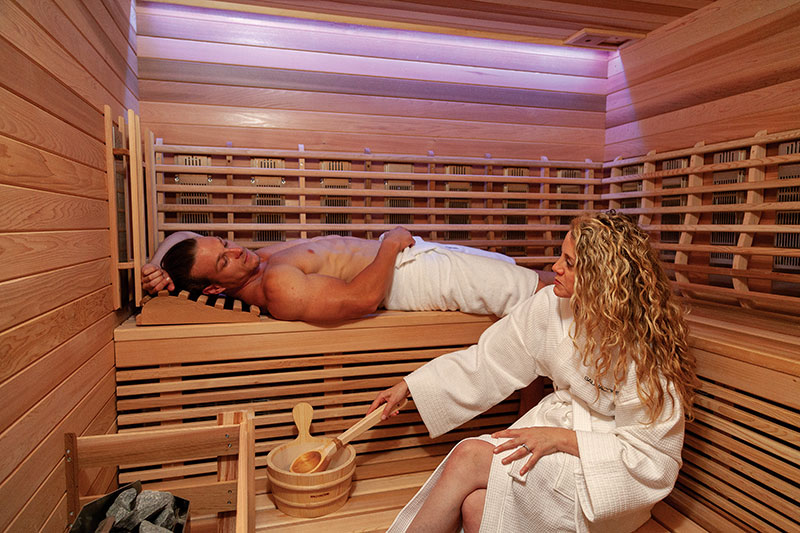
Saunas have gained unprecedented popularity, prompting some to ponder the reasons behind their surge, while others question why it took so long for them to gain widespread recognition.
Saunas have been a growing wellness commodity for spas, gyms, yoga studios, hotels, resorts, and many more commercial locations for years. Residential saunas have also been increasing in demand, especially over the past two years, which has been a whirlwind.
Amid the global pandemic, saunas emerged as a highly sought-after wellness product, and these demand trends appear to be enduring. Before delving into this transformative shift, it is important to understand some essential elements about saunas. The following explores these various areas.
History of saunas
The origins of the sauna can be traced back more than 2,000 years to Finland. A sauna was simply a wooden room or a stone temple with a hole in the dirt (referred to as a “pit”), and it was filled with a wood fire. Finns would use the sauna for many daily activities—from eating meals and social gatherings to relaxation. The birthing ritual would also take place in the sauna, and new mothers would use the space for rest.
Sauna rooms were made of stone, brick, and most commonly wood. A wood structure, whether for interior or exterior use, is the perfect material choice for any sauna design. Later, heat sources evolved, and many options became available. As awareness of the benefits of saunas grew, they became the “must-have” item for almost every home in Finland.
From the author’s standpoint, the use of saunas is deeply ingrained in Finnish culture. In this nation of 5.5 million, the number of saunas is comparable to the number of television sets, totaling approximately 3.3 million. About two decades ago, during a trip to Finland for business and leisure, the author made the fascinating observation that households there might have more saunas than cars.
The author found this phenomenon intriguing yet did not fully understand why Finns believed households should have at least one sauna, with many opting for two. Was it a necessity or a preference? The author sought an answer, only to receive the response, “Us Finns love our saunas!” Despite the vague reply, the author considered this a valuable piece of information for sauna enthusiasts. Twenty years later, the question lingered: would the author and the rest of the world come to understand it, too?
Types of saunas
There are many heat source options available for saunas, from hot rock to infrared and to steam.
As mentioned, saunas began as fire pits, but this is no longer common, as a wood-burning stove has now replaced the traditional fire pit. Wood-burning saunas are great options for any outdoor sauna and cottage living. There are options to have the wood stove stoked from the interior or exterior.
Interior stoke will allow the user to bring wood inside the sauna and feed it. Exterior stoke will allow filling the wood chimney from outside the sauna, reducing mess inside the sauna, but the user will still have to step outside to refill each time. The choice becomes a matter of client preference, as both options offer distinct benefits.
Some wood stoves also have optional add-ons of a water tank or a rock cage for a more industrial feel, which is a popular style for camps. Wood-stove-fired saunas are popular in areas where electricity is remote or expensive.
Traditional electric saunas
Electric sauna stoves, often referred to as a “traditional sauna with rocks,” are quite popular and perhaps the most popular for many commercial spaces. Gyms and hotels have had traditional saunas for many years, as this service allows users to enjoy the benefits of a sauna in a large communal setting.
Sauna electric heaters are both convenient and offer a wide range of kilowatt sizes, voltage options, and control upgrades, making them among the most popular sauna styles, past and present. These traditional electric saunas require minimal maintenance, as there is no need to cut and fill wood or clean up soot. These saunas include a safety feature: the electric stove/heater controls have an automatic shut-off. The automatic shut-off feature is an added benefit, since with a wood-burning sauna, it is important to ensure the fire is put out first.
This convenience has now opened many doors for sauna enthusiasts, as the sauna is no longer just an exterior structure, leading to increased demand for indoor saunas. Now, these traditional saunas (available indoors or outdoors) also allow users to pour water onto the rocks to increase humidity. During colder months, adding sauna essences to the water-filled bucket can provide benefits for colds and flu-like symptoms. It was a win-win for anyone wanting to improve their wellness: a sauna that can be used year-round, indoors or outdoors.
Infrared saunas
An infrared sauna is not a “hot sauna” (although some may argue otherwise). It is more of a soothing, warm sauna with no water. One may wonder, why is it called a sauna? This is primarily because the benefits of heat in a wood room may be compared to the same benefits of infrared saunas. Moreover, infrared saunas provide a more comfortable heat and penetrate the body directly, whereas traditional saunas heat the room, and users perspire when the room is hot.
Infrared saunas offer enjoyment for individuals who prefer a milder experience and find traditional saunas too hot. With an infrared sauna, they can still reap the benefits without enduring intense heat. When communicating with clients, one can draw a comparison between saunas and a hot summer day. Traditional saunas represent the scorching heat of 2 p.m. sunlight, while infrared saunas provide a sensation akin to sitting in the shade under a large willow tree. The comforting warmth characterizes the experience of an infrared sauna. With three sauna options now available, there is a choice to meet everyone’s needs.
Dual saunas
Dual saunas are the best of both worlds in one room. A dual sauna combines an infrared sauna and a traditional sauna (e.g. a hot stone heater) in one room. With these, users may enjoy the metaphor of both the intense 2 p.m. sun and an escape to the shade. This sauna is one of the most popular on the market, helping clients who are unsure which sauna to purchase make an easy choice.
Steam rooms
Steam rooms, unlike sauna rooms finished in wood, are finished in tile, glass, marble, etc. (i.e. non-porous materials similar to a shower.) The steam room is also called a “hammam spa,” a room with high humidity and steam. Some people also refer to this as a “wet sauna.”
Some steam rooms are standalone, while others combine a steam room and a shower. This is a great option for using an existing shower space and converting it into a steam room for added ambiance and benefits.
The versatility of saunas
The variety of saunas to choose from is plentiful. With a sauna manufacturer, a sauna enthusiast can achieve design and size possibilities. If there is no space outside for a sauna, then inquire about an indoor sauna. No space is too small, and no space is too large for a sauna.
If there is no space inside a house, consider an outdoor sauna. Is electricity an issue for an outdoor sauna? Outdoor saunas have a wood-burning option for remote cottage life or for use near the lake, where electricity is not available. Some models also come in plug-and-play forms. An ideal spot for a sauna room is the basement, bedroom, or bathroom.
What if standard sauna models just do not fit the space? Inquire with a North American sauna manufacturer to customize a sauna made just for the user. They can be made to the exact size to fit any space, be it a commercial gym, yoga studio, hotel, or a house. Does the client require a specific wood type? This is possible, too. With countless possibilities, a sauna manufacturer can make a vision come to life.
The benefits of saunas
The benefits of saunas vary widely. Bathing in saunas is not just for relaxation and pleasure, but may also be linked to several health benefits. From relaxation and improving heart conditions to ridding flu-like symptoms, the sauna has been a go-to for aiding many ailments for years.
Sauna benefits include reductions in the risk of vascular diseases such as high blood pressure, cardiovascular disease, and neurocognitive disease; nonvascular conditions such as pulmonary diseases; and arthritis, headache, and flu.
Sauna users also enjoy the conditioning of the body’s muscles from aches and pains. Increased endorphins during sauna bathing allow one to reduce stress and pain. (Endorphins are polypeptides made by the pituitary gland and the central nervous system.)
While endorphins are doing their job of increasing in a sauna, serotonin also increases. Low levels of serotonin allow for depression. Serotonin is the “happy hormone,” and it positively affects mood and behavior. Increased levels of serotonin and lowered levels of cortisol (stress hormone) are among the many benefits of saunas.1
Another benefit is burning calories. According to the U.S. Army medical research (Ward Dean, M.D.), “A moderately conditioned person can easily sweat off 500 grams [17.6 oz] in a sauna in a single session, consuming nearly 300 calories in the process.”
Other positives from sauna bathing include sharpening one’s senses, beautifying the skin, revitalizing the mind and body, and an overall escape from the realities of daily life it offers. However, one is still recommended to consult their physician before any sauna use, particularly for health use.
Exploring the history, types, options, and benefits of saunas, the narrative now transitions to an examination of why saunas have become one of the hottest commodities on the worldwide market.
Becoming a hot commodity
During the pandemic, saunas became one of the most in-demand wellness products by consumers, a trend that appears here to stay.
Saunas witnessed a surge in popularity within various commercial spaces, but the pandemic prompted individuals to transform their homes into personal retreats and wellness sanctuaries. With travel on the decline, staycations gained traction. And what better staycation than having a sauna conveniently at home, ready for use at any time of the day?
The popularity of home saunas rose notably, surprising the author, who had initially doubted that the Finnish lifestyle of households having more saunas than cars would translate to North America. However, clients began ordering two or three saunas—one for the home interior, another for the backyard by the pond, and yet another for the cottage. The author was impressed to witness individuals who had never contemplated saunas now purchasing multiple units at a time.
With more time at home, individuals researched online, particularly exploring the benefits of saunas. The author explained to one client, “Heat lifts, it lifts dirt from a counter, just as heat from a sauna lifts toxins from the body.” People engaged in frequent research, realizing that saunas not only eliminate toxins but also elevate one’s spirits. During the pandemic, activating one’s spirit, or the “happy hormone” (serotonin), became essential for many.
Individuals found the concept of customizable saunas to meet their design preferences intriguing, marking a significant shift in perspective. The revelation that saunas are energy-efficient captivated them. Additionally, discovering the availability of sauna types catering to both those who prefer higher temperatures and those who prefer milder ones left them amazed.
Saunas have evolved into a personal indulgence or a thoughtful gift for others—a symbol of relaxation, an at-home spa experience, a gesture of wellness, or even as a way to shed some extra pounds. Regardless of the specific purpose, saunas have undeniably secured a spot on people’s priority lists today and in the days to come.
Heightened awareness led people to comprehend what the Finns had known all along: saunas hold more significance than TVs and cars. Saunas become integral to one’s way of life, and when individuals incorporate saunas into their lifestyle, the benefits become exponential.
Notes
1 Jari A. Laukkanen, Tanjaniina Laukkanen, and Setor K. Kunutsor, “Cardiovascular and Other Health Benefits of Sauna Bathing: A Review of the Evidence,” Mayo Clinic Proceedings 93, no. 8 (2018): 1111–1121.
References
Roy, Robert L. “The Sauna: A Complete Guide to the Construction, Use, and Benefits of the Finnish Bath.” 2nd ed. Chelsea Green Publishing, 2004.