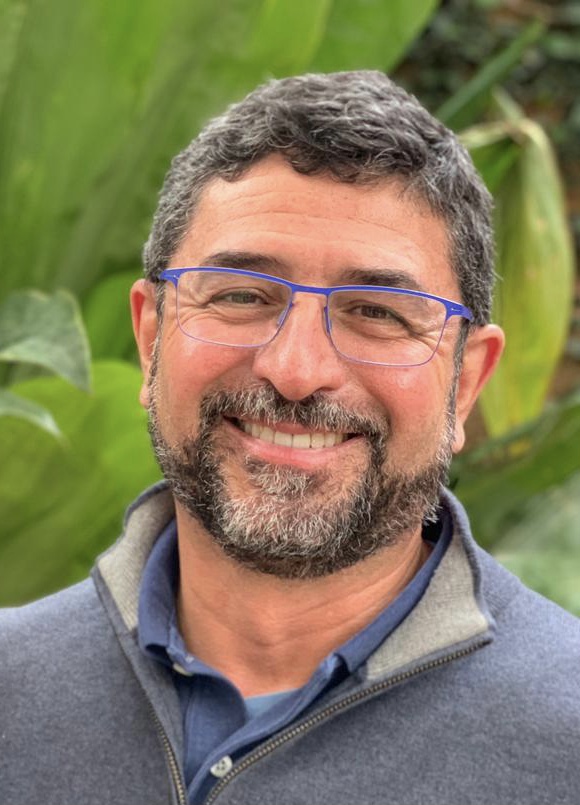
Step by step on his career path, Augusto Titarelli accumulated the puzzle pieces that would form his current venture in the pool and spa industry.
Last December, Titarelli launched National Pool Partners, a service business that is eventually meant to cover the U.S. It will accomplish this by purchasing existing pool/spa operations.
Born in Brazil, Titarelli is a naval architect and marine engineer by training, having earned a degree in ship building.
“I joke that I started my career trying to keep water outside of vessels and now, at the end of my career, I’m keeping water inside vessels,” he says. “But, joking aside, it has a lot of similarities, because we’re dealing with flows, pumps and piping, water chemistry — a bunch of things that are very common to this industry. So I’m finding a lot of common touch points between the two.”
He also earned a Masters in Business Administration.
Ship building took a hard hit in the 1980s, so Titarelli left the industry. In 1988, he worked at a start-up electronic security company. “That was a great school for me,” he says. “When you work for a start-up and you’re employee No. 1, things get real, really fast. I know what it is to collect in the morning and pay bills in the afternoon.”
Eventually that company was purchased by what is now known as Tyco. “At 31 years old, I was part of selling a company, so I understand both sides of the equation,” he says. In 1996, Tyco moved Titarelli to the U.S., before transferring him to Spain a few years later.
He credits his next position, managing ADT Secure Services, with starting a passion for the service industries.
“I realized that running a service business requires special people,” he says. “When you’re in manufacturing, you build something, you put it in stock, and then someone sells that … In service, the value is produced by someone in front of your customer or at the premises of your customer. You don’t have a factory behind it, you have the person. I think that’s fascinating, because it’s the purest form of creation of value.”
In 2006, he came back to the U.S. and has been here ever since. He joined pest-control giant Terminix, most recently serving as vice president of field operations and continuing his work in the service industries.
“Residential services are very appealing,” Titarelli says. “You are at somebody’s home doing something for their family or their family’s memories.”
Where his work at Tyco had involved purchasing companies that generated $30 million to $100 million a year, Terminix acquired smaller businesses, more similar to pool/spa service firms. After five years, he left the firm and decided to start National Pool Partners. With a private equity partner, he and his team use a different model than Terminix. Where the pest-control company would purchase smaller operations and absorb them into their operations, NPP would “aggregate” companies, giving them more autonomy.
“I think the greatest opportunity for an aggregation model is for an industry where it hasn’t happened yet and you can still write the book on how things are going to get done,” he says. “When I started with Terminex, pest control was about a $9 billion service industry. The two top companies in that space controlled $4 billion of the $9 billion. They had very rigid, specific operating methods and software and procedures.
“[In the pool industry,] you don’t have the calcification you have in other more mature industries. That means you can go in and create something new.”
Titarelli’s Outlook
Q: How do you expect business models such as yours to impact the industry as a whole?
A: There’s always going to be space for all players at different levels in the market. A model doesn’t have to supersede or eliminate any other model. Even in a very mature service market, the one-poler equivalent in pest control never disappeared, and it played a very important role.
And companies like ours are able to expand pricing, which benefits my competitor as well. When we ran the math on the current situation of raw materials and labor, we had to raise prices. We found that, in the areas where we raised prices, other companies did that over time, because they felt they had some air coverage when someone’s already doing that. So I’m providing room for a one-poler to maybe make a little more money as well. I’m creating a certain umbrella that obviously improves my business, but also improves everybody else’s business.
Q: What advice would you give for selling a company?
A: I think one of the things that is very important to think about is that you can never sell your own risk tolerance to somebody else. Where people typically focus a lot on discussing how many multiples I’m going to get, people forget an important aspect, which is what risk or sustainability is associated with the business I’m selling. The more sustainable and less risky my business, the better the valuation.
But what I’ve found in the industry is that the [metrics] that people [track] tend not to be able to answer all the questions that someone would ask to assess risk. So if I had a recommendation for somebody who’s trying to sell, it’s start organizing your information. Sometimes just the quality of information is a great indicator of the risk associated to it. Organize your data as best as you can, know what you’re going to be asked, and prepare those answers even before you engage. That is very helpful because it creates fairness, creates a level playing field for the seller and the buyer.
In this industry, there’s an emotional factor. I compare it to giving your child up for adoption. It’s difficult for any company to put value on that. So I also recommend having a lot of clarity on all the intangibles that are important for the seller. For instance, is it important that my people are well treated?
Titarelli’s Takes
Single biggest accomplishment of his career: When I took over the North division in Terminix, it was a $250 million company, and it was last in the ranking of all the divisions. In two years, it was the top division. So we took it from fifth place to first place.
Most significant achievement of his nonprofessional life: I have kids whom I’m very proud of, and putting them through great education is my proudest achievement. That’s giving them something that they can’t ever lose, which is a great foundation, both moral as well as formational.
Motto or favorite saying: “Be the change you want to see in the world,” from Mahatma Gandhi. Maybe it’s the engineer in me, but I’ve always thrived in transformation — changing things and getting them to be better. You have to drive by example, particularly in a service business.
Most important thing he does to maintain focus and energy: I set aside time to think. Once a week I block off time in my schedule that no one can penetrate, and I think about the more strategic issues of the business. I have a mind map where I line up certain things that are strategically important, and I devote myself just to think about them without interruption.
Favorite business book: The Checklist Manifesto by Atul Gawande. It has a lot of relevance for service businesses, where consistency is important. As a doctor who was tasked by the World Health Organization with reducing hospital infections worldwide, Gawande studied what other people do to get things done the same way always, and the culture that goes with creating consistency.
Personal role model and the single most important thing they taught: My first boss at Sensormatic, Tony Guiliano, balanced a lot of business acumen with great human quality. Even in moments of crisis, he told us, “Don’t take this too seriously. If you can’t laugh at yourself, you’re missing a big opportunity.” He moved me from Brazil to the U.S., so he had a big impact on my life.