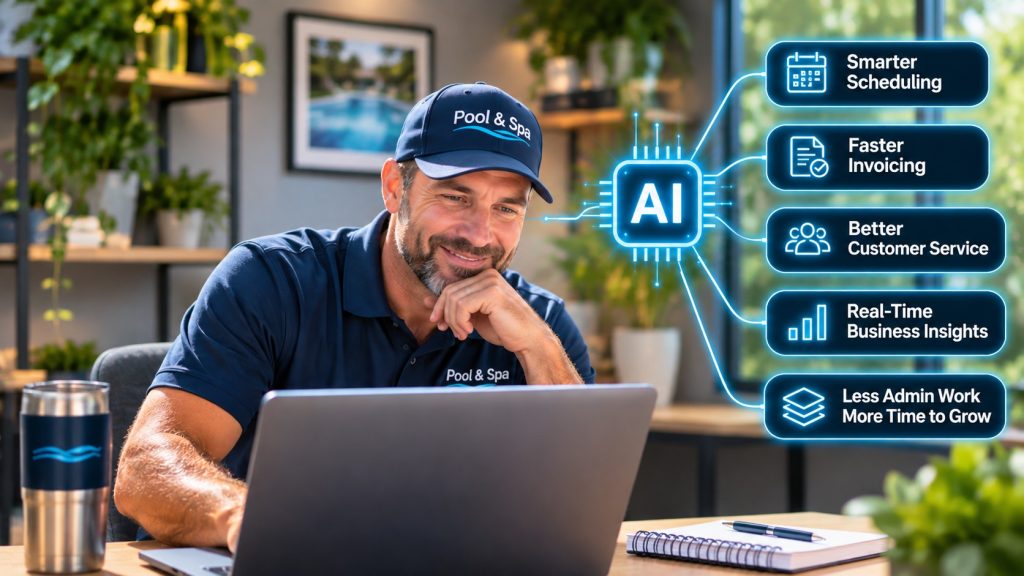
On a Sunday evening, a homeowner notices that her pool heater keeps shutting off. She asks an AI assistant for a nearby pool heater repair service, taps the first credible name, and sends a message through the company’s website. The next hour decides whether she becomes a customer. Could the AI assistant find the business? How quickly did someone answer the message? Did the answer sound like it came from people who really understand pools and pool heaters? The right AI tools can ensure your business is found, responds rapidly, and gives a credible answer.
Artificial intelligence can help at each moment of that Sunday evening. It will NOT replace the person behind the water-testing counter or the technician in the truck, and it should not try. AI works best as an assistive layer. It drafts, sorts, summarizes, and reminds, while the company’s expertise, accurate customer records, and human oversight stay in charge, especially when the subject is water chemistry, equipment diagnostics, safety, or pricing.
The strongest AI strategy uses technology to make knowledgeable people faster, better prepared, and more responsive, which is the advantage independent pool and spa businesses have always held over big-box competitors.
For pool and spa retailers, builders, and service companies, that makes AI less of a marketing novelty and more of an everyday operating tool, and the quiet months ahead are the time to put it in place. Systems set up in November, December, and January can be tested on a manageable volume of inquiries and running smoothly by spring 2027, just as homeowners start looking. Here are six areas where AI helps and where it needs supervision.
Get found in AI searches
Customers start with Google, map apps, social media, reviews, or an AI-generated answer, and often settle on a short list before visiting a single website. Those answers draw on whatever information about a business the tools can find and trust, so the work is practical:
- Complete, accurate listings, hours, and contact details, consistent everywhere the business appears
- Website content that states plainly what the company offers and which towns it covers
- Current product, service, and FAQ information
- Genuine customer reviews, answered promptly
A company cannot buy its way into an AI-generated answer, but it can keep credible information wherever a customer or search tool might look. That upkeep never ends, so many dealers outsource it to a marketing provider that specializes in the pool and spa industry. Visibility builds over months, so updates made this winter pay off by spring.
Reply faster, stay personal
A homeowner who sends a message at night may well contact a second company if the first has not replied by morning. Most questions are familiar: “Do you service my area?” “Can I schedule a water test?” “Are technicians available this week?”
AI can draft a reply in seconds, but the goal is not a generic automated response. It is a faster reply grounded in the customer’s history and the company’s real schedule. When customer profiles, text messaging, and online scheduling are linked with in-store systems, an AI-drafted text can point to an appointment that is actually open, and the next staff member can see what has already been said.
Smarter follow-up
AI is well suited to reading through customer records for patterns and preparing outreach that a person then approves:
- A customer with an older heater receives a pre-season inspection reminder.
- A spa owner receives a maintenance reminder based on prior service intervals.
- A lead who asked about a renovation receives follow-up suited to the project’s stage.
Each depends on records the business already keeps: equipment profiles and water test results from a mobile service app, point-of-sale purchase history, and online orders, all feeding one customer profile. That is the practical meaning of omnichannel. AI prepares the outreach; the retailer chooses the offer, validates the information, and owns the relationship.
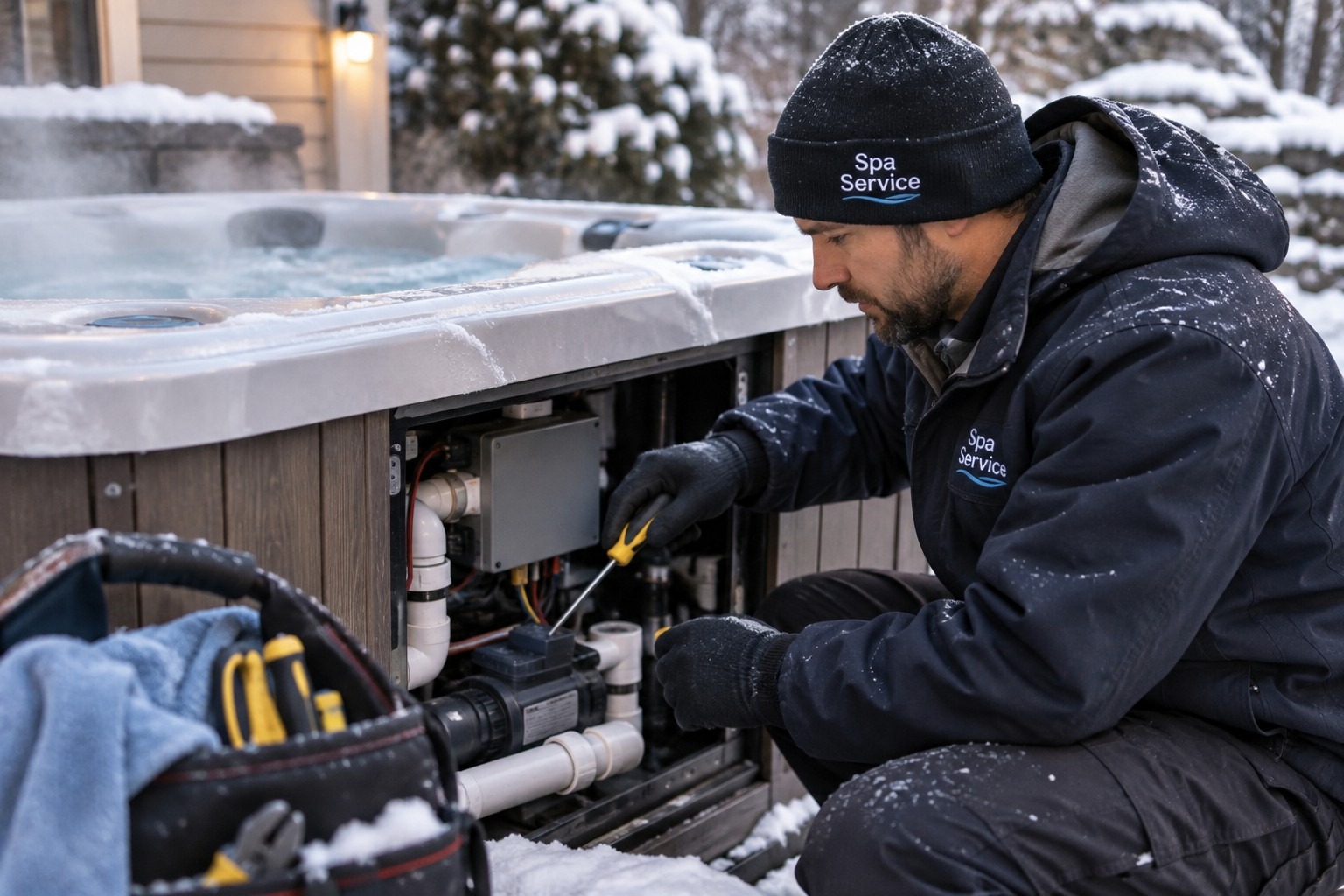
Image courtesy Anything involving chemistry, electrical or gas equipment, safety covers, or repairs should be checked by qualified staff. RB Retail & Service Solutions
Better-prepared staff
Some of the most useful applications help employees, particularly newer ones, walk into a conversation prepared. AI can summarize a customer’s purchases, service visits, and open issues, and turn a technician’s recommendation into plain language. With a mobile point-of-sale app, an associate can check inventory and complete the sale at the customer’s side, using a short AI summary as a briefing, not a script. In the field, technicians’ notes, water test results, and before-and-after pictures become a visit summary AI can draft and the office can check.
The limits are firm. AI is not a water chemistry authority or a substitute for trained diagnosis. Anything involving chemistry, electrical or gas equipment, safety covers, or repairs should be checked by qualified staff.
Less paperwork, more customer time
Much of the office workload is repetitive, and AI can take the first pass: sorting inquiries, drafting routine messages, and writing call summaries and CRM notes. Connected systems help too. Mobile service apps replace paper forms, online payment tools automate recurring billing, and electronic signatures and emailed receipts replace paper.
AI then surfaces the lead nobody called back, the overdue balance, or the product that runs short every spring, and a person decides what to do. The point is not doing more with fewer people, but giving employees more time for work that calls for judgment.
Keep people in charge
Speed without accuracy can damage a reputation that took decades to build. Workable guardrails include:
- Human review of customer-facing messages
- Protection of customer data, and staff training on what never goes into public AI tools
- Clear escalation paths for technical, safety, and complaint-related questions
- No invented product specifications or inaccurate availability information
Industry knowledge is a guardrail, too. A general-purpose tool does not know that a homeowner searching for a “green pool fix” is a same-week lead, or that April looks nothing like December. Someone who does know has to set the rules and check the output. The test for any AI tool is simple: Does it understand this business, and are its answers grounded in this company’s own records?
A business that spends November, December, and January cleaning up its records, sharpening its online presence, and testing AI-assisted replies will enter spring 2027 easier to find, quicker to respond, and better prepared for every homeowner whose heater quits on a Sunday evening.